
Best Cardiologist Websites in 2026: What Makes Them Stand Out (And What Your Practice Can Learn From Them)

When someone's heart health is on the line, the first thing they do is search online. In fact, studies show that 77% of patients search the web before booking an appointment with a specialist, and cardiology is no different. Whether a patient is following up on a referral from their primary care physician or searching independently for a "cardiologist near me," your website is typically the very first impression your practice makes. And in a specialty as trust-sensitive as heart care, that first impression carries immense weight.
This blog takes a deep dive into the best cardiologist websites of 2026, what they're doing right, what design and UX patterns appear consistently among top performers, and what actionable takeaways any cardiology practice can implement to improve its digital presence. Whether you're building a new cardiology website from scratch or auditing your existing site, this guide will give you the blueprint.
Why Your Cardiologist Website Matters More Than Ever in 2026
Let's start with something that gets overlooked: a cardiologist's website is not just a digital business card. It is an active marketing and patient-acquisition engine.
The referral-only model of attracting cardiac patients is fading fast. A growing share of patients (particularly those on high-deductible insurance plans) are shopping independently for specialists. Even patients who do receive a referral routinely Google the recommended cardiologist before confirming the appointment, and many switch providers based entirely on what they find online.
This means your website must do three jobs simultaneously:
Build trust and establish clinical authority - patients need to feel safe before they even pick up the phone.
Communicate services clearly - what conditions do you treat? What procedures do you offer?
Convert visitors into booked appointments - every page should guide the user toward a clear next action.
The best cardiologist websites of 2026 do all three with elegance. Let's look at who's getting it right.
The Top Cardiologist Websites of 2026: A Curated Look
1. Manhattan Cardiology
Website: https://manhattancardiology.com/
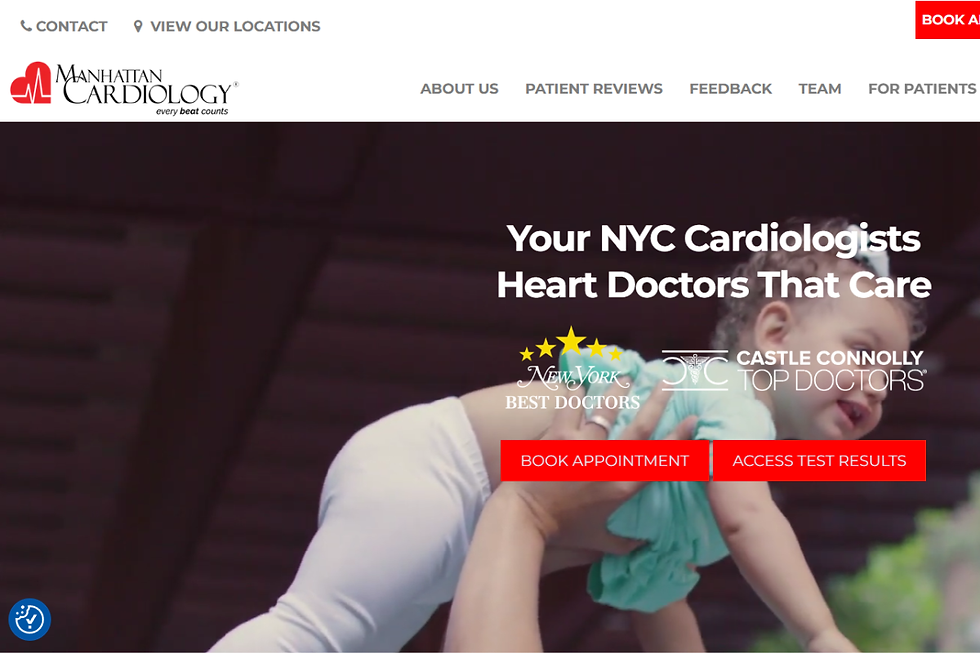
Manhattan Cardiology's website is a masterclass in brand-driven web design for cardiology practices. The red-themed design is consistent, recognizable, and confidence-inspiring. What really distinguishes it is the transparent display of cumulative review scores from platforms like Google and Zocdoc, prominently featured on the homepage. In an era where social proof drives patient decisions, this kind of trust-building is hard to overstate.
What to learn: Aggregate your patient reviews and feature them front and center. Patients trust other patients.
2. Avicenna Cardiology (NYC Heart and Vein)

Website: https://avicennacardiology.com/
The Avicenna Cardiology website combines content density with intuitive navigation. The moment a visitor lands on the homepage, they're prompted to request an appointment, a best-practice placement for a call-to-action. A fixed header ensures navigation remains accessible as users scroll, and patient testimonials are woven in at the page's bottom alongside location-based information. This makes the site both locally relevant and trust-forward.
What to learn: Place your appointment CTA above the fold. Make it impossible to miss.
3. Beverly Hills Cardiology
Website: https://beverlyhillscardiology.com/
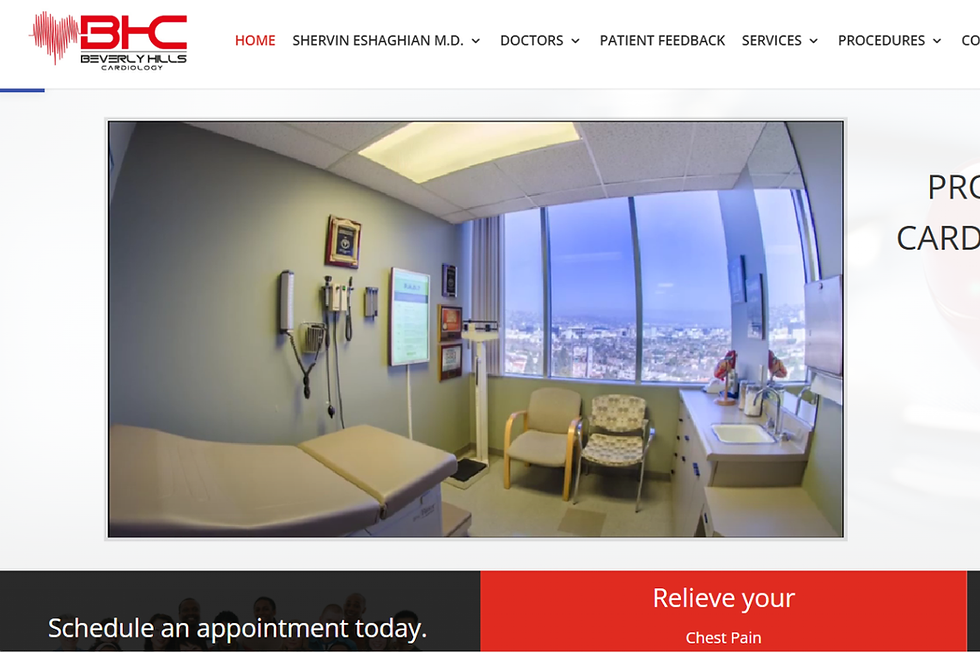
Beverly Hills Cardiology packs a punch in its information delivery without feeling cluttered. The homepage covers available services, procedures performed, and the specific cardiac conditions treated, all within a well-structured, visually guided layout. The fixed header means users are never more than one click away from wherever they want to go on the site.
What to learn: Organize services, procedures, and conditions into distinct, navigable sections. Don't make patients hunt for what they need.
4. Preventive Cardiology of New York
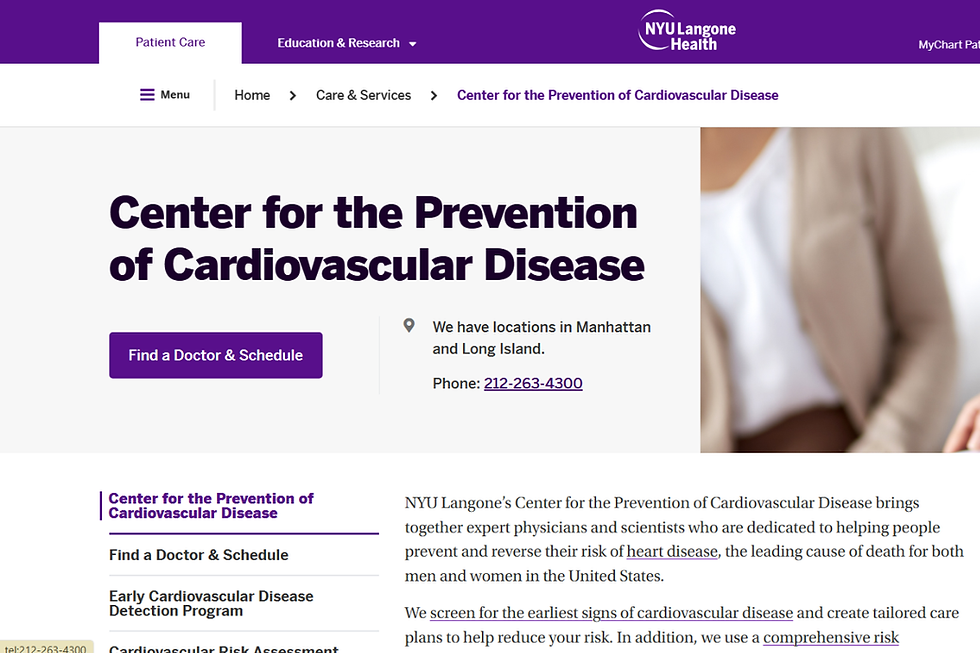
This site takes a smart, patient-first approach to information architecture. Rather than forcing all visitors through the same funnel, the homepage immediately asks users to self-select: are they looking for individual care or corporate health services? It's a simple UX decision, but it dramatically improves relevance for each visitor type and keeps bounce rates low.
What to learn: Segment your audience on the homepage when you serve multiple patient types. Personalized journeys convert better.
5. Pacific Heart Institute
Website: https://www.pacificheart.com/
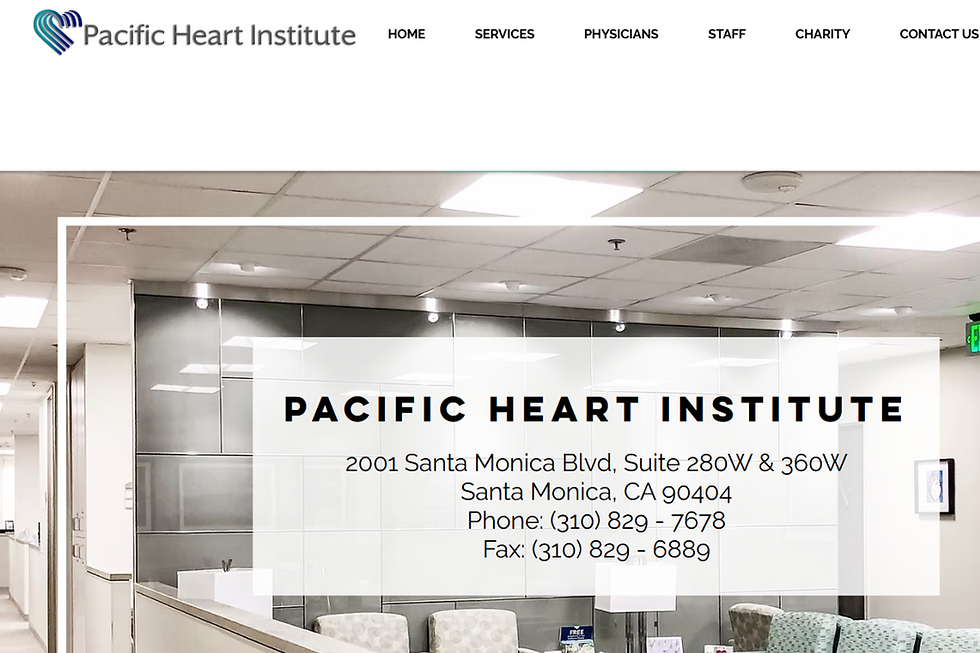
Pacific Heart Institute succeeds in striking a balance between visual storytelling and clinical credibility. The homepage uses a combination of text, images, and video, a multimedia approach that increases engagement time and communicates expertise far more effectively than text alone. Blog content is teased toward the bottom, subtly signaling that this practice educates, not just treats.
What to learn: Use video to bring your practice to life. A short "meet the doctor" clip or a patient education video can dramatically boost both trust and time on page.
6. Northside Hospital Cardiovascular Institute

Website: https://northsidecvi.com/
Northside's website is a masterclass in elegant information architecture for large cardiovascular programs. The homepage slider allows for multiple content threads to coexist without competing. Themed icons guide users through the range of cardiovascular services, making it easy for patients to quickly identify whether their specific condition is treated there. The clean design and thoughtful use of white space communicate institutional confidence.
What to learn: For practices with a broad service range, visual icon-based service navigation reduces cognitive load and keeps users engaged.
7. Michael Twyman, MD, Integrative Cardiology

Website: https://drtwyman.com/
Dr. Twyman's website is a standout example of personal branding done right for independent cardiologists. The site uses distinctive color-coding to separate content into digestible sections and, critically, features a professional photo of Dr. Twyman himself on the homepage. This human touch is essential in cardiology: patients aren't choosing a logo; they're choosing a physician they trust with their heart. Literally.
What to learn: For solo practitioners and small practices, lead with your face. Patients connect with people, not institutions.
8. Athletic Heart (San Francisco)
Website: https://www.athleticheartsf.com/
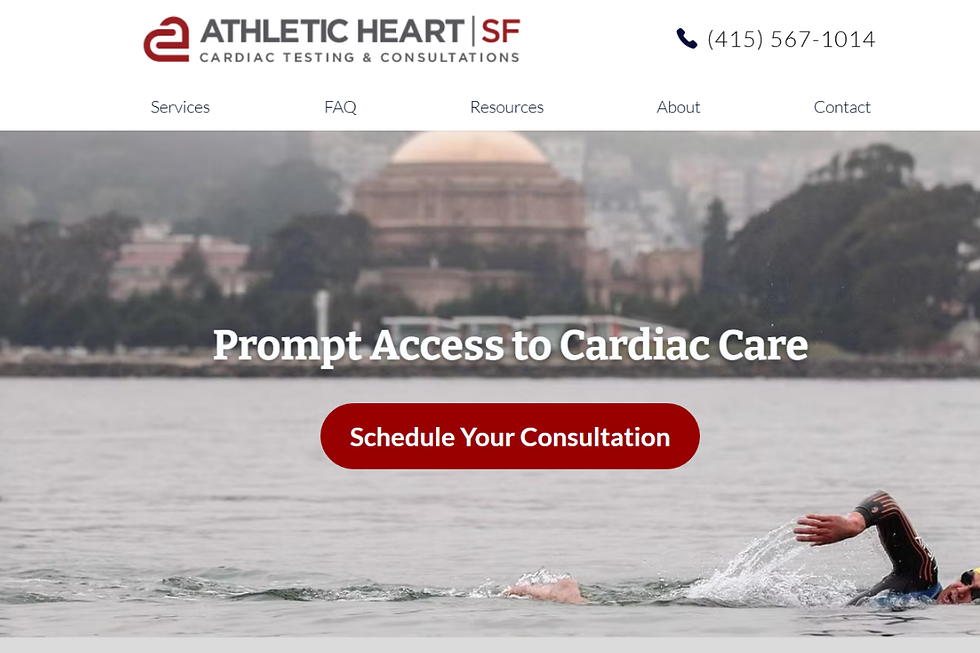
Athletic Heart SF demonstrates the power of niche positioning within cardiology. By focusing specifically on athletes and active individuals, the practice has differentiated itself in a saturated market. The website reinforces this positioning at every turn, linking to trusted media publications that have covered the practice, a smart authority-building signal for both visitors and search engines.
What to learn: If your practice has a specialty focus, let your website scream it. Niche positioning builds authority and improves local SEO performance for high-intent searches.
9. Just Heart Cardiovascular Group

Website: https://www.myjustheart.com/
Just Heart stands out for its embrace of multi-format content. Images, icons, thumbnails, videos, and text all work together on the homepage, creating a rich, engaging experience. The site also invites visitors to download the practice's mobile application, a forward-thinking move that extends the patient relationship beyond the clinic visit.
What to learn: In 2026, patients expect omnichannel engagement. A companion app or patient portal integration is no longer a luxury; it's a differentiator.
10. Biltmore Cardiology

Biltmore Cardiology keeps things practical and conversion-focused: their floating header prominently displays both a phone number and the location tab. Testimonials are placed at the center of the homepage. Every design decision prioritizes action and reduces friction.
What to learn: Put your phone number everywhere. In healthcare web design, accessibility is everything.
11. Nevada Cardiology

Website: https://www.nevadacardiology.com/
Nevada Cardiology's website builds trust through people, not just words. Doctor profiles and caregiver images are featured prominently, and the site showcases the awards and recognitions the facility has received. This combination of human presence and institutional credibility is a powerful formula for trust.
What to learn: Display your team. Showcase your credentials, awards, and board certifications visibly; don't bury them in an "About" page.
12. Chicago Cardiology Institute
Website: https://chicagocardiology.com/
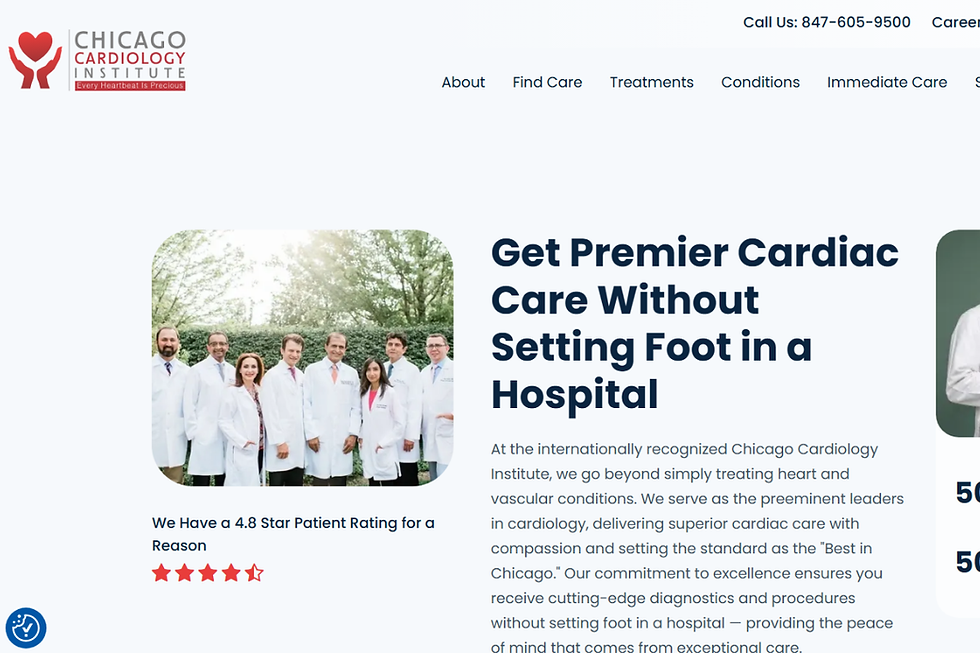
The Chicago Cardiology Institute uses a background hero image of a patient with the physician as its homepage centerpiece, a deliberate, emotionally resonant choice that communicates warmth and care before a single word is read. Testimonials scroll at the bottom. The design immediately says, "You are safe here."
What to learn: Emotional design cues matter in healthcare. Images of real doctor-patient interactions create connection and safety.
13. Colorado Heart and Vascular
Website: https://www.chvpc.com/
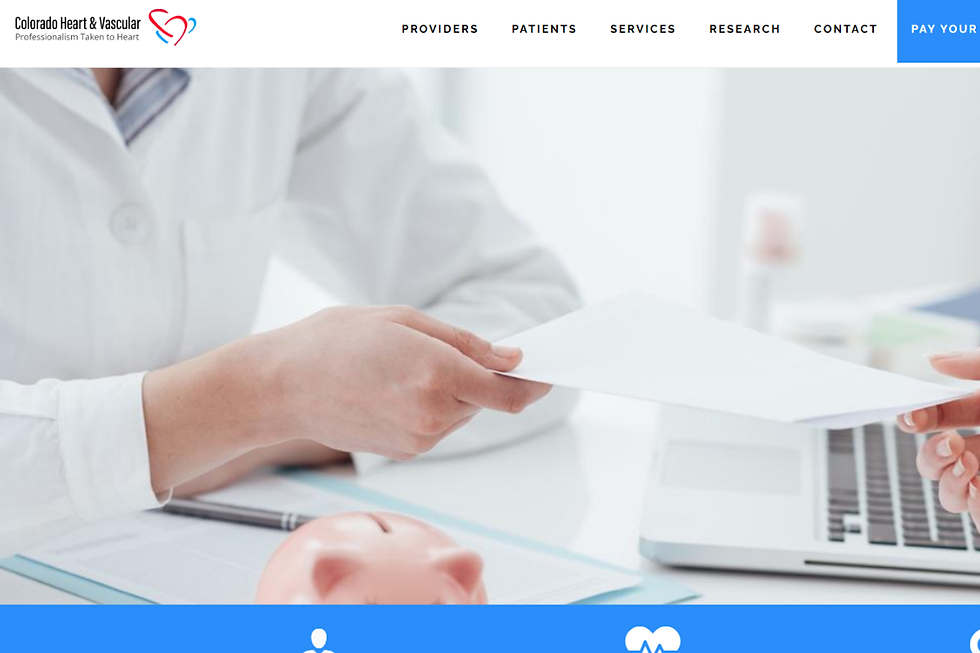
Colorado Heart and Vascular is organized for the full patient journey: the homepage includes an invitation to request an appointment, displays multiple location options, outlines the practice's mission and vision, and links to blog content, all on a single, vertically scrolling homepage. This makes it a one-stop destination for both new and returning patients.
What to learn: Your homepage should serve both first-time visitors and returning patients. Think of it as a lobby, not just an introduction.
14. Pediatric Cardiology of San Diego (Kids Heart SD)

Website: http://www.kidsheartsd.com/
Pediatric cardiology calls for an entirely different aesthetic, and this site delivers. Bright, warm colors and a child-friendly visual language establish trust with parents, making decisions not just with patients. A visible display of office hours further reduces anxiety for busy families.
What to learn: Your design language should match your patient demographic. Pediatric cardiology needs warmth; interventional cardiology needs precision and confidence.
15. Maryland Cardiovascular Specialists

Website: https://marylandheart.com/
Maryland Cardiovascular Specialists delivers maximum utility from the homepage: contact details, location information, and downloadable forms are all readily accessible. This no-nonsense approach respects patients' time and removes friction from the new patient intake process.
What to learn: Operational details (directions, insurance accepted, downloadable new patient forms) belong on the homepage, not three clicks deep.
What All the Best Cardiologist Websites Have in Common
After analyzing the top performers, several patterns emerge that define what makes a cardiologist's website great in 2026. These aren't optional extras; they are the foundation.
1. Mobile-First, Responsive Design
This is non-negotiable. The majority of healthcare searches now happen on mobile devices, and Google's ranking algorithms give strong preference to mobile-optimized pages. A responsive cardiologist website adapts flawlessly to any screen size: smartphones, tablets, and desktops. Buttons are easy to tap, images resize correctly, and load times are fast. A poor mobile experience doesn't just frustrate patients; it actively tanks your search engine rankings.
2. HIPAA-Compliant Patient Portals and Online Scheduling
The best cardiologist websites in 2026 don't just display information; they enable action. Online appointment scheduling, secure patient portals, and HIPAA-compliant contact forms are now baseline expectations. Research shows that 43% of patients prefer healthcare providers that allow online booking, and failing to offer this means losing patients to competitors who do. Secure HTTPS access also signals trustworthiness to both patients and search engines.
3. Strategic Use of Social Proof
Patient testimonials, aggregate review scores, Google ratings, Healthgrades stars, and even media mentions serve a critical psychological function on cardiologist websites: they reduce the anxiety of choosing a specialist for something as serious as heart care. The best sites surface this social proof prominently, not tucked into a side tab but woven into the main content flow.
4. E-E-A-T Signals: Experience, Expertise, Authoritativeness, and Trustworthiness
Google's E-E-A-T framework is particularly important for cardiologist websites because cardiology falls under Google's YMYL (Your Money or Your Life) category, meaning Google holds medical content to an exceptionally high standard. Top-ranking cardiologist sites demonstrate expertise through detailed physician bios that list board certifications and academic credentials. affiliations, authority through backlinks and media mentions, and trustworthiness through verified reviews and transparent information about practices.
5. Fast Load Speeds and Technical SEO
A visually beautiful website that takes five seconds to load will be abandoned by patients and penalized by Google. Core Web Vitals is the set of performance signals. Google uses it to measure page experience, including load time, interactivity, and visual stability. The best cardiologist websites invest in image optimization, clean code, and quality hosting to ensure fast, stable performance across all devices.
6. Clear, Compelling Calls to Action (CTAs)
Every page of a high-performing cardiologist's website guides the visitor toward a specific next step: "Schedule an Appointment," "Call Our Office," "Request a Consultation," or "Download New Patient Forms." These CTAs are prominently placed (above the fold on the homepage), clearly worded, and repeated throughout the page so that whenever a visitor is ready to act, the path forward is obvious.
7. Local SEO Optimization
Patients searching for cardiac care are almost always looking locally. The best cardiologist websites are optimized for local SEO through Google Business Profile integration, consistent NAP (Name, Address, Phone) information, schema markup for medical practices, and location-specific landing pages. Ranking for searches like "cardiologist near me," "heart specialist in [city]," or "echocardiogram [city]" requires deliberate local SEO investment, and the top practices are doing exactly that.
8. Patient Education Content
The most trusted cardiologist websites don't just sell services; they educate. Blog posts, condition explainers, FAQ pages, and video content around topics like "symptoms of atrial fibrillation," "when to see a cardiologist," or "what to expect from an echocardiogram" serve multiple purposes: they position the physician as a trusted expert, they attract organic search traffic, and they answer the questions patients are already asking before they ever contact the practice.
Design Trends Shaping Cardiologist Websites
Beyond the fundamentals, certain design trends are elevating cardiologist websites
from good to exceptional this year.
Clean Minimalism With Medical Gravitas: Gone are the days of overcrowded, text-heavy medical websites. 2026's top cardiologist sites use generous white space, clean typography, and high-resolution imagery to communicate professionalism without overwhelming patients. The minimalist approach signals organization, precision, and confidence, qualities patients want in a cardiologist.
High-Resolution Human Photography: Stock photography is visibly on its way out. Authentic photos of the actual physicians, staff, and facility are far more effective at building trust than generic images of stethoscopes or cartoon hearts. Patients want to see the person they'll be trusting with their cardiac care.
Color Psychology With Purpose: The recurring use of red, blue, and white across leading cardiologist websites isn't accidental; these colors communicate trust (blue), urgency and vitality (red), and clinical cleanliness (white). The best sites use these colors with consistency across all brand touchpoints.
Interactive Service Navigation: Rather than long lists of services, top cardiologist websites use clickable icons, service cards, and interactive menus to help patients quickly identify whether their specific condition or needed procedure is offered.
Video Integration: Brief introduction videos, patient education clips, and facility tours are increasingly common on top cardiologist sites. Video dramatically increases average session time, which is a positive engagement signal for SEO.
The SEO Landscape for Cardiologist Websites
Cardiology is one of the most competitive medical specialties online. In major metropolitan areas (Los Angeles, New York, Houston, and Chicago), dozens of cardiologists compete for visibility for the same search terms. To rank, cardiologist websites need to go beyond the basics.
The highest-value keyword categories for cardiologist SEO in 2026 include:
High-intent local searches: "cardiologist near me," "heart doctor [city]," "cardiology clinic [city]," "best cardiologist in [city]."
Condition-specific searches: "symptoms of atrial fibrillation," "heart failure treatment," "coronary artery disease specialist," and "when to see a cardiologist."
Procedure-specific searches: "echocardiogram [city]," "stress test near me," "cardiac catheterization," "Holter monitor."
Brand/credibility searches: "[doctor name] cardiologist," "[practice name] reviews"
AI-powered search algorithms now personalize results and evaluate user intent more accurately than ever before. In 2026, cardiologist SEO requires structured data (schema markup) specifically designed for medical practices (including physician credentials, accepted insurance plans, and hospital affiliations) so that search engines can properly understand and rank the practice's content.
Voice search is also increasingly relevant: patients with cardiac concerns are asking devices "find a cardiologist near me" or "what are the symptoms of a heart attack," and websites optimized with conversational, question-answering content capture this traffic.
How Pravaah Consulting Builds High-Performance Healthcare Websites
Building a great cardiology website requires a delicate balance between clinical authority and digital marketing psychology. At Pravaah Consulting, we specialize in crafting custom, high-converting digital spaces for medical practices. We look past basic templates to engineer websites structured for visibility, scalability, and genuine patient acquisition. From lightning-fast page load times to advanced medical search engine optimization, we make sure your digital pulse beats stronger than your competitors'. When we build a cardiologist's website, we bring together:
Custom, mobile-first design that reflects your practice's identity and clinical authority
HIPAA-compliant patient portals and online scheduling integrations
Full-stack SEO technical optimization, local SEO, E-E-A-T content strategy, and schema markup
AI-powered features from intelligent chatbots for patient intake to automated appointment reminders
Speed-optimized, secure hosting built for the performance standards Google now demands
Ongoing analytics and growth support to continuously improve your patient acquisition funnel
Whether you're an independent cardiologist looking to compete with larger institutions or a multi-location cardiovascular group seeking a unified digital presence, we build solutions customized to your specific competitive landscape.
Key Takeaways: What a Great Cardiologist Website Must Have in 2026
To summarize the benchmarks from the top cardiologist websites reviewed above, a high-performing cardiology website in 2026 must include the following:
Mobile-responsive, fast-loading design
A clear, above-the-fold call-to-action for appointment scheduling
HIPAA-compliant online scheduling and patient portal
Prominent physician bios with credentials, certifications, and photos
Patient testimonials and aggregate review scores
Service and condition pages optimized for search
Local SEO: Google Business Profile, consistent NAP, schema markup
Condition and procedure-specific landing pages for long-tail keyword capture
Patient education content (blog, FAQ, video)
Clear contact information on every page
Frequently Asked Questions (FAQs)
1. What are the essential design features for a top-tier cardiologist's website?
The best cardiologist websites feature a highly visible, persistent Call-to-Action (like an "Appointment Request" button), mobile-responsive page design, patient review integrations (from Google and Zocdoc), quick access to telemedicine portals, and explicit, easy-to-read listings of clinical locations and operating hours.
2. Why is a mobile-responsive web design critical for cardiology clinics?
A mobile-responsive design ensures your website adapts perfectly to smartphones and tablets. Because the majority of local medical searches occur on mobile devices, a responsive layout prevents slow load times, fixes broken navigation, and provides an accessible, stress-free experience for elderly or anxious users seeking urgent heart care.
3. How do patient testimonials and Google Reviews affect a medical website's credibility?
Real patient testimonials and verified third-party Google Reviews provide essential social proof. Displaying aggregate ratings directly on your homepage instantly lowers consumer skepticism, builds clinical trust, and aligns with search engine algorithms that reward websites exhibiting high E-E-A-T (Experience, Expertise, Authoritativeness, and Trustworthiness).
4. What is the benefit of including a dynamic blog on a heart specialist's website?
An active cardiology blog establishes your physicians as trusted thought leaders in cardiovascular medicine. From a marketing perspective, regularly publishing high-quality articles that target health-related keywords consistently drives organic search traffic, improves your domain authority, and addresses patient questions before they even book a visit.
5. How should medical services be structured on a cardiology homepage?
Cardiology homepage services should be organized into clear, clickable visual elements or tabs. Sorting advanced procedures (like angioplasties or heart failure monitoring) into clear sub-categories helps users find information quickly without encountering overwhelming walls of text.
6. Why is an omnipresent header with contact info vital for a medical web page?
An omnipresent, or "sticky," header ensures your clinic's phone number, address, and booking buttons remain fixed at the top of the screen as a user scrolls. This design removes friction, allowing patients to reach your front desk immediately without needing to scroll back up or click to a secondary contact page.
7. What security features are required for a 2026 cardiology practice website?
Modern cardiology websites must utilize a secure HTTPS connection, implement end-to-end encryption for patient intake forms, and fully comply with healthcare privacy regulations such as HIPAA. These features safeguard confidential patient health information and build consumer trust.
8. How does a custom doctor portal improve patient retention on healthcare sites?
An integrated doctor portal allows patients to securely access lab results, request prescription refills, track chronic vital signs, and coordinate follow-up appointments from a single centralized hub. Providing this convenience significantly upgrades the patient experience, minimizing administrative friction and driving long-term practice loyalty.


